
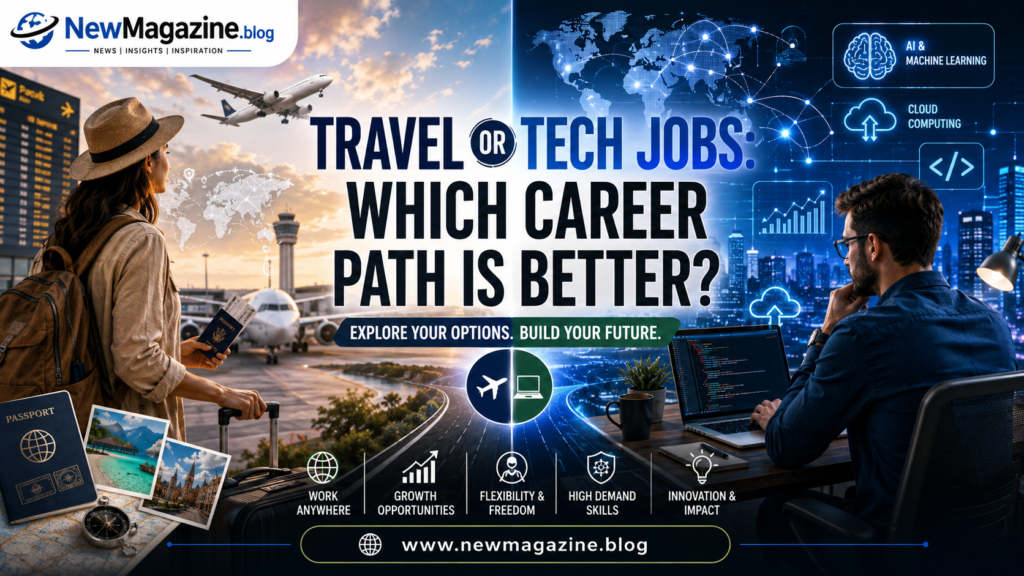

Choosing between travel or tech jobs can be difficult because the two career paths offer very different opportunities, lifestyles, skills, and long term possibilities. Travel jobs can provide variety, international exposure, customer interaction, and opportunities to work in airlines, tourism, hospitality, travel agencies, cruise operations, or global travel services. Tech jobs, on the other hand, can offer higher earning potential, remote work opportunities, specialized skills, and access to rapidly growing industries. But the decision is not always as simple as choosing one or the other. A growing number of careers combine both industries.
Travel technology, digital tourism platforms, airline software, online booking systems, cybersecurity, data analytics, AI, and remote technology roles are creating opportunities for people who enjoy travel but also want to build valuable technical skills. This guide explores travel or tech jobs, compares the two career paths, explains who each option may suit, and highlights careers that combine technology with the travel industry.
What Is the Difference Between Travel and Tech Jobs?
The biggest difference between travel and technology careers is the type of work involved. Travel jobs are generally connected to moving people, managing destinations, providing hospitality, planning trips, operating transportation, or delivering travel related services. Tech jobs involve creating, managing, supporting, analyzing, or improving technology.
Understanding Travel Jobs
Travel careers exist across a wide range of industries. Someone working in travel may become a travel consultant, tour operator, flight attendant, hotel manager, travel coordinator, cruise employee, tourism marketer, event planner, or destination specialist. These jobs can be attractive because the work is often connected to people, cultures, locations, and experiences. However, not every travel job involves constantly visiting new destinations. Many travel professionals work in offices, airports, hotels, customer service centers, or digital platforms. The amount of actual travel depends heavily on the specific role.
Understanding Tech Jobs
Technology jobs cover an even broader range of careers. Common examples include software development, web development, cybersecurity, data analysis, cloud computing, IT support, artificial intelligence, digital marketing technology, product management, and UX design. The technology sector can offer opportunities across nearly every industry. A developer may work for a bank, airline, healthcare company, government organization, startup, or travel platform. This flexibility is one of the major advantages of building technology skills.
Travel or Tech Jobs The Quick Comparison
For someone deciding between travel or tech jobs, the best choice depends on personal interests and career priorities. Travel careers may be better for people who enjoy communication, customer service, changing environments, culture, hospitality, and direct interaction with people. Technology careers may be better for people who enjoy problem solving, computers, digital tools, analysis, building systems, and continuous learning.
Career Lifestyle and Daily Work
Travel jobs can be less predictable. A role in aviation or hospitality may require working evenings, weekends, holidays, or changing shifts. Some positions involve being physically present at a particular location. This can be exciting for people who dislike routine, but it may also create challenges for work life balance. Tech jobs often provide more opportunities for flexible or remote work. However, technology work can also involve deadlines, long periods of focused computer work, complex projects, and the need to continuously learn new tools. Neither lifestyle is automatically better. The important question is which type of work environment matches your personality.
Income and Career Growth
Income varies significantly depending on the role, location, experience, and employer. Some travel careers can offer excellent salaries, particularly in management, aviation, luxury hospitality, international operations, and specialized tourism. However, entry level travel and hospitality positions may have lower salary ceilings compared with highly specialized technology roles. Technology careers can offer strong earning potential, especially for professionals with in demand skills such as software engineering, cloud computing, cybersecurity, artificial intelligence, and data science. That does not mean every tech job automatically pays more. A successful travel industry entrepreneur or senior aviation professional may earn more than an entry level IT worker. The comparison should focus on specific career paths rather than broad industry labels.
Who Should Choose Travel Jobs?
Travel jobs can be an excellent choice for people who enjoy working with people and experiencing different environments. The industry can offer careers that are social, dynamic, and connected to international experiences.
People Who Enjoy Communication and Customer Experience
Many travel and hospitality roles require strong communication skills. Travelers may need help solving problems, changing plans, booking services, understanding destinations, or managing unexpected situations. A successful travel professional often needs patience, adaptability, and the ability to remain calm under pressure. These skills can also be valuable outside the travel industry. Customer service, sales, operations, event management, and international business all depend on effective communication.
People Who Prefer Variety Over Routine
Some people do not enjoy sitting in the same office every day. Travel careers can provide more variety depending on the role. Airline professionals may work across different destinations. Tour professionals may manage changing groups and locations. Travel consultants may research destinations and create personalized experiences. However, it is important to research the actual responsibilities of a job. The word travel in a job title does not always mean free vacations or constant international trips.
Who Should Choose Tech Jobs?
Technology careers can be attractive because digital skills are useful across many industries. A strong technical skill can allow someone to work for different types of organizations throughout their career.
People Who Enjoy Solving Problems
Many tech jobs involve solving problems. A software developer may identify a programming issue. A cybersecurity professional may investigate a security threat. A data analyst may search for patterns that help a business make better decisions. The work often requires logical thinking, curiosity, and persistence. People who enjoy learning how systems work may find technology careers particularly rewarding.
People Who Want Remote Work Opportunities
Remote work is one reason many people are attracted to technology careers. While remote work is not guaranteed, many technology roles can be performed online. This can create flexibility in where a person lives and works. For someone who loves travel, a remote technology career may provide an interesting alternative to a traditional travel job. Instead of working specifically in the travel industry, the person may develop a tech career that allows greater location flexibility.
Travel or Tech Jobs for Salary Potential
Salary is an important factor when choosing a career. However, people should avoid selecting an industry based only on average salary statistics.
Why Tech Careers Often Have Higher Earning Potential
Specialized technology skills can create significant value for businesses. Organizations need professionals who can build software, secure digital systems, manage cloud infrastructure, analyze data, and develop AI powered products. As professionals gain experience and develop expertise, they may qualify for higher level technical or leadership roles. Freelancing and consulting can also create additional opportunities for experienced technology professionals.
Where Travel Careers Can Be Financially Rewarding
Travel careers can also provide strong earning opportunities. Management positions in hospitality, aviation, luxury tourism, international travel operations, and corporate travel can be financially rewarding. Entrepreneurship is another possibility. A successful travel agency, tourism business, travel content company, or specialized travel service can potentially generate substantial income. The challenge is that income may vary more depending on tourism demand, economic conditions, location, and the type of business.
Travel Technology Jobs Offer the Best of Both Worlds
For many people, the answer to travel or tech jobs may not be choosing one industry. Travel technology combines both fields. Travel tech companies develop the systems and platforms that make modern travel possible.
What Is Travel Technology?
Travel technology includes the digital tools used to search, book, manage, and improve travel experiences. Examples include online booking platforms, airline systems, hotel management software, digital payment tools, travel apps, navigation systems, AI travel assistants, and tourism data platforms. These businesses need professionals with technical, marketing, business, design, and customer experience skills.
Popular Travel Tech Career Opportunities
A travel tech company may hire software developers, web designers, cybersecurity professionals, digital marketers, SEO specialists, data analysts, product managers, and customer success teams. This creates opportunities for professionals who want to work with travel related products without becoming traditional travel employees. Someone with skills in digital marketing, SEO, web development, or AI can potentially work with hotels, airlines, travel platforms, tourism companies, or travel startups. Travel technology can therefore be an attractive career path for people interested in both digital innovation and global travel.
Latest Update in Travel and Technology Careers
The relationship between travel and technology continues to grow. Artificial intelligence, automation, mobile applications, digital payments, data analytics, and personalized customer experiences are becoming increasingly important across tourism and hospitality.
Artificial Intelligence Is Changing Travel
AI can help businesses analyze customer preferences, automate support, personalize recommendations, and improve operational planning. Travel companies can use AI to process large amounts of information and provide faster digital services. For job seekers, this means that skills involving AI tools, data analysis, automation, and digital product management may become increasingly useful within the travel industry. However, technology is also changing job requirements. Workers may need to combine industry knowledge with digital skills to remain competitive.
Digital Customer Experience Is Becoming More Important
Modern travelers often expect to search, compare, book, pay, and manage trips online. This increases demand for websites, mobile applications, online marketing, payment systems, and customer support technology. As a result, professionals who understand both customer experience and digital technology may have strong opportunities. The travel industry is becoming more technology dependent, creating career paths that did not exist in the traditional tourism economy.
Best Travel Jobs for Career Growth
Travel careers can offer a wide variety of opportunities. The best role depends on whether you prefer customer interaction, operations, sales, management, or international work.
Airline and Aviation Careers
Aviation offers careers beyond pilots and flight attendants. Airlines and airports need professionals in operations, customer service, scheduling, logistics, technology, marketing, cybersecurity, and management. Technology is also becoming increasingly important in aviation. Airlines rely on complex software systems for reservations, operations, customer communication, maintenance, and security. A person with technology skills may therefore find opportunities within aviation without needing to work in a traditional IT company.
Tourism and Hospitality Careers
Hotels, resorts, tourism companies, and travel agencies need people who can manage operations and improve customer experiences. Digital marketing has become especially important. Hotels and tourism businesses compete for visibility on search engines, social media platforms, travel websites, and online review platforms. This creates opportunities for SEO specialists, social media marketers, content creators, web developers, and online advertising professionals.
Best Tech Jobs for Flexibility
Technology offers many career options, from highly technical roles to business focused positions. People do not necessarily need to become software engineers to build a career in technology.
Software and Web Development
Software development involves creating applications, systems, and digital products. Web development focuses on websites and web based platforms. These skills can be applied to almost any industry, including travel. A developer could work on an airline booking system, hotel website, travel application, or completely unrelated product. The transferable nature of development skills is one of the biggest advantages of a technology career.
Cybersecurity and Cloud Computing
Businesses are increasingly dependent on digital infrastructure. Cybersecurity professionals help protect systems, networks, applications, and sensitive information. Cloud professionals help organizations manage digital infrastructure and scalable computing systems. Both fields can provide opportunities across multiple industries. As travel companies collect customer and payment information, cybersecurity and cloud expertise can also be valuable within travel technology.
Data Analytics and Artificial Intelligence
Data is becoming an important business resource. Organizations use analytics to understand customers, measure performance, identify trends, and make better decisions. Artificial intelligence is creating additional opportunities for professionals who understand machine learning, automation, data engineering, and AI product development. Travel companies can use these skills for demand forecasting, pricing analysis, customer personalization, fraud detection, and operational planning.
Skills You Need for Travel or Tech Jobs
The skills required for travel or tech jobs are different, but there are also important areas of overlap. Communication, adaptability, problem solving, and digital literacy can be valuable in both industries.
Essential Skills for Travel Careers
Travel professionals often benefit from strong communication and customer service skills. Language abilities can also be useful, especially in international tourism and hospitality. Other valuable skills include sales, destination knowledge, organization, conflict resolution, cultural awareness, and time management. A professional who understands digital marketing can gain an additional advantage because many travel businesses depend heavily on online visibility.
Essential Skills for Technology Careers
Technology careers may require skills such as programming, data analysis, cybersecurity, cloud platforms, digital marketing technology, UX design, or software tools. However, technical skills alone are not always enough. Employers also value communication, teamwork, project management, and the ability to understand business requirements. The most valuable professionals are often those who can connect technical knowledge with real business problems.
Education and Training for Travel Careers
A university degree can be useful for some travel careers, but it is not the only path. Professional certifications, practical experience, language skills, and customer service abilities can also play important roles.
Tourism and Hospitality Education
Degrees or courses in tourism, hospitality, aviation, business, or international management can provide useful knowledge. However, employers may also value direct experience. Internships and entry level positions can help people understand how the industry operates. For many roles, communication skills and practical ability may be just as important as academic qualifications.
Digital Skills Can Create an Advantage
Travel professionals who develop technology skills may have more career options. Learning SEO, digital marketing, website management, analytics, CRM software, or AI tools can help a candidate stand out. The travel industry increasingly depends on digital platforms. Someone who understands both tourism and technology may therefore be able to move into more specialized positions.
Education and Training for Tech Careers
Technology careers can be entered through several paths. A computer science degree can be valuable, but self learning, online courses, certifications, bootcamps, and practical projects can also help build relevant skills.
Building a Technical Foundation
Beginners should start by choosing a specific area. Trying to learn every technology at once can create confusion. Someone interested in development might begin with web technologies. A person interested in cybersecurity may start with networking and security fundamentals. Someone interested in data may learn spreadsheets, SQL, and analytics tools. A focused learning path is usually more effective than collecting unrelated certificates.
Building a Portfolio
Practical work is extremely important in many technology careers. A portfolio can demonstrate what you can actually do. For example, a web developer can build websites. A data analyst can create dashboards. A cybersecurity learner can complete ethical training labs. A digital marketer can show campaign or SEO projects. Combining practical evidence with strong communication can improve job opportunities.
Why Travel or Tech Jobs Are Trending
Career choices are changing because technology is influencing nearly every industry. At the same time, many workers are placing greater value on flexibility, meaningful experiences, and location independence.
The Rise of Location Independent Work
Remote technology jobs have made it possible for some professionals to work from different locations. This has created interest in digital nomad lifestyles and careers that provide greater flexibility. However, remote work still requires discipline. Working while traveling may involve challenges involving time zones, internet quality, visas, taxes, and employer policies. It should not automatically be viewed as a permanent vacation.
The Digital Transformation of Travel
Travel businesses are becoming increasingly dependent on technology. Online booking, mobile check in, digital payments, AI customer service, data analytics, and automated operations are changing how companies serve travelers. This creates opportunities for professionals who can help travel businesses modernize. For many job seekers, travel technology may provide a more balanced answer than choosing between traditional travel or traditional tech jobs.
Reviews and Career Perspective
There is no universal winner in the travel or tech jobs comparison. The better career depends on your personal goals.
When Travel Jobs May Be Better
Travel careers may be a better choice if you value people, culture, hospitality, changing environments, and direct customer interaction. They can also be attractive for people who want careers connected to international business. However, candidates should research salary expectations, working schedules, and actual travel requirements before making a decision.
When Tech Jobs May Be Better
Technology may be the stronger choice for people who want transferable skills, remote work opportunities, and access to multiple industries. The sector can also offer strong long term earning potential. However, technology requires continuous learning. New tools, programming languages, platforms, and business requirements can change quickly. People who dislike ongoing skill development may find some technology careers challenging.
How to Choose Between Travel or Tech Jobs
Instead of asking only which industry is better, ask which career path matches your goals. Your decision should consider interests, skills, financial expectations, lifestyle preferences, and willingness to continue learning.
Consider Your Personal Interests
Think about the type of work you enjoy. Do you prefer working directly with people, managing experiences, and operating in changing environments? Or do you enjoy solving technical problems, working with digital systems, and building products? Your natural interests can make it easier to remain motivated during difficult periods.
Consider Your Long Term Flexibility
Also consider how easily your skills can move between industries. Technology skills are often highly transferable. However, travel professionals can improve their flexibility by developing business and digital skills. The strongest long term strategy may be to build a core professional skill and then apply it to an industry you enjoy. For example, a digital marketer can specialize in travel. A developer can build tourism products. A data analyst can work for an airline.
Stay Connect With Us
Conclusion
The choice between travel or tech jobs does not have to be an either or decision.Travel careers can offer variety, human interaction, international exposure, and opportunities across tourism, aviation, and hospitality. Technology careers can provide transferable skills, specialized career paths, digital opportunities, and potential flexibility. For many professionals, the most interesting option may be the intersection of both industries. Travel technology is creating opportunities for developers, marketers, data analysts, cybersecurity specialists, AI professionals, designers, and product managers.
As travel businesses become increasingly digital, professionals who understand technology and customer experience may have a valuable advantage. The best career is ultimately the one that matches your strengths and long term goals. Instead of following salary trends or job titles alone, focus on building skills that you enjoy using and that can create opportunities across multiple industries.
Do Not Miss Our
Frequently Asked Questions About Travel or Tech Jobs
Are travel or tech jobs better?
Neither is automatically better. Travel jobs may be ideal for people who enjoy customer interaction, tourism, hospitality, and changing environments. Tech jobs may be better for those interested in digital systems, problem solving, flexible work, and specialized skills. Your personal interests and career goals should guide the decision.
Do travel jobs pay well?
Some travel jobs can pay very well, especially senior positions in aviation, international operations, hospitality management, and specialized tourism. However, entry level salaries may be lower than some specialized technology careers. Income depends heavily on the role, employer, experience, and location.
Are tech jobs good for people who want to travel?
Yes, potentially. Some technology roles offer remote or flexible work arrangements that can make travel easier. However, remote work policies vary by employer, and working internationally can involve legal, tax, visa, and scheduling considerations.
What are travel technology jobs?
Travel technology jobs involve using technology to improve travel and tourism services. Examples include software development, data analytics, cybersecurity, product management, digital marketing, and UX design for travel related companies.
Can I work in travel without a tourism degree?
Yes. Many travel careers value practical experience, communication skills, customer service, language abilities, sales skills, and industry knowledge. Specific positions may have additional requirements.
Can I get a tech job without a computer science degree?
Yes. Many technology professionals enter the industry through certifications, self learning, practical projects, vocational education, and other training paths. However, employers often expect candidates to demonstrate relevant skills.
Which tech jobs are useful in the travel industry?
Useful skills include web development, mobile application development, cybersecurity, cloud computing, data analytics, AI, digital marketing, SEO, UX design, and product management. These skills can be applied to airlines, hotels, tourism platforms, travel agencies, and travel tech startups.
Is travel technology a good career?
Travel technology can be an attractive career because it combines digital skills with a large global industry. The best opportunities depend on your specific expertise and the type of company you want to work for.