
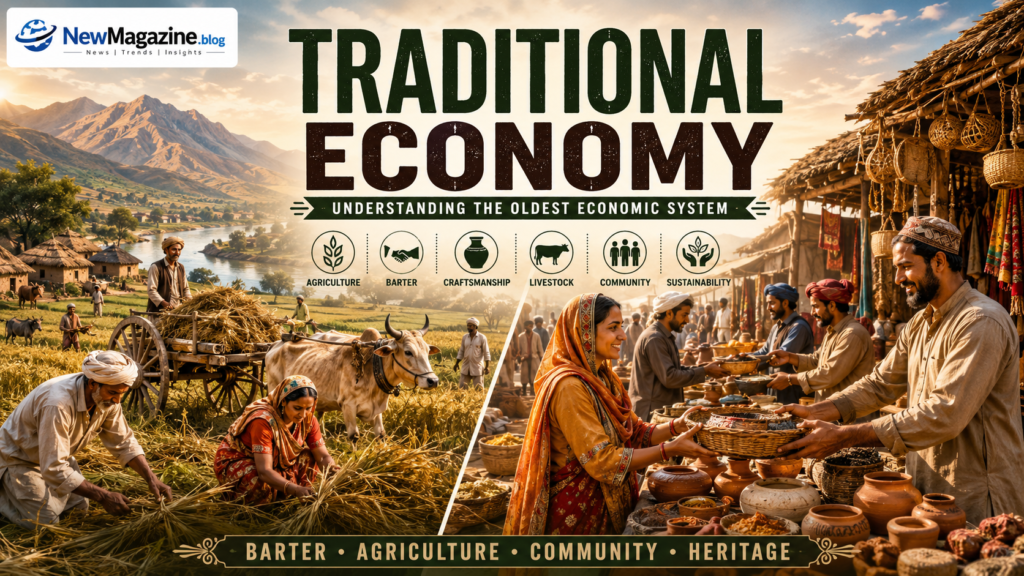

Understanding a traditional economy helping explained
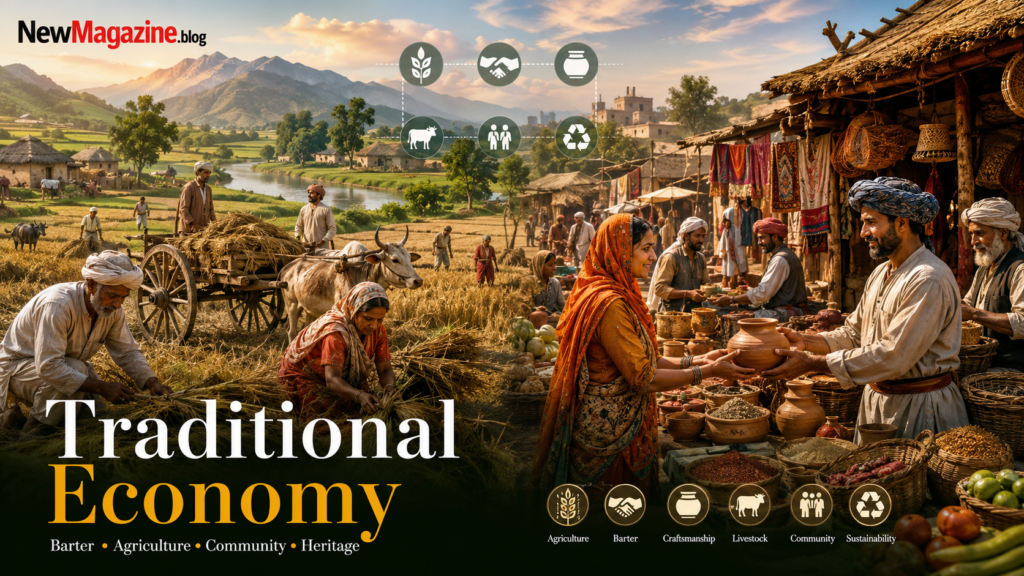
A traditional economy represents one of the oldest forms of economic organization in human history, where communities rely on customs, traditions, beliefs, and inherited practices to decide how goods and services are produced, distributed, and consumed. Unlike modern economic systems driven by advanced technology, financial markets, and industrial production, traditional societies often depend on agriculture, fishing, hunting, handicrafts, and local resource management. These economies have developed over generations, with knowledge passed from elders to younger members through cultural practices and everyday experiences.
In todays rapidly changing world, understanding a traditional economy helps explain how many communities continue to preserve their cultural identity while adapting to globalization and technological progress. Although this economic system is less common than market based or mixed economies, it still plays an important role in many rural and indigenous communities around the world. The relationship between people, nature, culture, and survival remains at the center of this economic model, making it an important subject in economics, sociology, and development studies.
What Is a Traditional Economy and How Does It Work
A traditional economy is an economic system where decisions about production, distribution, and consumption are mainly influenced by long established customs, social structures, and cultural traditions. Instead of relying heavily on prices, competition, or government policies, people follow methods that have been practiced by previous generations. Economic activities are often connected to family roles, community responsibilities, and environmental conditions. The primary goal is usually survival and maintaining community stability rather than maximizing profit or economic growth.
The way resources are managed in a traditional economy depends greatly on local knowledge and natural surroundings. For example, farming communities may plant crops based on seasonal patterns learned from ancestors, while fishing communities may follow traditional methods that respect local ecosystems. Skills such as farming techniques, craftsmanship, animal raising, and food preservation are usually transferred through families and community education. This creates a strong connection between economic activities and cultural heritage, allowing communities to maintain their unique way of life.
Historical Development of Traditional Economic Systems
Throughout human history, traditional economic systems were the foundation of most societies before industrialization and modern financial systems developed. Early human communities depended on hunting, gathering, farming, and exchanging goods through barter systems. Without modern banking, large scale industries, or global trade networks, people created economic practices based on cooperation, shared responsibilities, and available resources. These systems allowed communities to survive in different environments, from forests and mountains to deserts and coastal regions.
As civilizations developed, many traditional practices continued even when new economic models appeared. Agricultural societies maintained farming traditions, local crafts remained important sources of income, and community based resource management continued in many regions. Although industrial economies transformed many parts of the world, traditional economic practices survived because they provided social connections, environmental knowledge, and cultural continuity. Today, many indigenous communities still use traditional methods alongside modern economic activities.
Main Characteristics of a Traditional Economy
One of the defining characteristics of a traditional economy is its dependence on customs and cultural practices. Economic decisions are often not made through formal institutions or financial calculations but through habits developed over generations. Communities usually have clear expectations about responsibilities, occupations, and resource sharing. A persons role in economic activities may be influenced by family background, age, gender traditions, and community needs.
Another important feature is the limited use of advanced technology compared with industrial or digital economies. Traditional communities often rely on manual labor, basic tools, and locally available materials. This does not necessarily mean these societies lack knowledge or skills instead, their expertise is often focused on sustainability, adaptation, and efficient use of local resources. Traditional farming methods, natural medicine practices, and handmade products demonstrate specialized knowledge developed through long term experience.
A traditional economy also emphasizes community cooperation rather than individual competition. People often work together during planting seasons, harvest periods, construction activities, or cultural events. The concept of shared responsibility helps maintain social relationships and ensures that essential needs are met. This cooperative approach creates strong community bonds but can also limit economic expansion when compared with competitive market systems.
How Traditional Economies Differ From Modern Economic Systems
The major difference between a traditional economy and modern economic systems is the way economic decisions are made. In capitalist or market economies, supply, demand, competition, and consumer preferences strongly influence production. Businesses typically focus on efficiency, innovation, and profitability. In contrast, traditional communities make decisions based on inherited knowledge, cultural expectations, and maintaining social balance.
Modern economies usually depend on technology, international trade, financial institutions, and specialized industries. People often choose careers based on market opportunities, education, and personal goals. Traditional economies, however, commonly involve occupations passed through generations. A family of farmers may continue agricultural practices, while a family of artisans may maintain traditional crafts. This creates economic stability within communities but may reduce opportunities for rapid economic mobility.
Another difference involves resource usage and environmental relationships. Many traditional societies have developed practices that encourage careful management of natural resources because their survival depends directly on the environment. Modern industrial economies often prioritize large scale production and economic growth, which can sometimes create environmental challenges. However, traditional systems may also face difficulties meeting the needs of growing populations due to limited production capacity.
Advantages of a Traditional Economy
One major advantage of a traditional economy is the preservation of cultural knowledge and community identity. Economic activities are closely connected with traditions, languages, beliefs, and social values. By continuing traditional farming, crafts, and resource management practices, communities maintain important parts of their historical heritage. This cultural connection can strengthen social unity and provide a sense of belonging among community members.
Another benefit is the emphasis on sustainability and environmental awareness. Many traditional communities have developed methods that reduce waste and protect natural resources. For example, indigenous farming techniques may focus on maintaining soil health, protecting biodiversity, and using resources carefully. Because communities depend directly on their surroundings, they often develop a deeper understanding of ecological balance.
Traditional economic systems can also create strong social support networks. Since people often cooperate rather than compete, community members may help each other during difficult times such as poor harvests, illness, or natural disasters. This collective approach can improve social security and reduce isolation. In many traditional societies, economic success is measured not only by wealth but also by community well being and relationships.
Challenges Faced by Traditional Economic Systems
Despite their strengths, traditional economies face several significant challenges in the modern world. One major limitation is lower productivity compared with technologically advanced economic systems. Because many traditional communities rely on manual labor and simple tools, producing enough goods for larger populations can become difficult. Limited access to technology, education, and infrastructure may restrict economic opportunities and income growth.
Another challenge is vulnerability to environmental changes. Many traditional communities depend heavily on agriculture, fishing, or natural resources, making them sensitive to climate change, droughts, floods, and resource depletion. Changes in weather patterns can disrupt traditional practices that have worked for centuries. Without access to modern technology or alternative sources of income, communities may struggle to adapt to new conditions.
Globalization has also created pressure on traditional economic systems. Modern markets, consumer preferences, and industrial production can reduce demand for traditional products and practices. Younger generations may move toward urban areas seeking better employment opportunities, causing traditional skills and knowledge to decline. Balancing modernization with cultural preservation remains one of the biggest challenges for communities using traditional economic methods.
Traditional Economy and the Role of Culture
Culture plays a central role in shaping how traditional economies function. Economic activities are often connected with religious beliefs, family structures, social customs, and historical experiences. Unlike systems where economic decisions are separated from social life, traditional economies combine economic activity with community values. Farming festivals, traditional crafts, seasonal celebrations, and shared labor practices all demonstrate how culture influences economic behavior.
The transmission of knowledge is another important cultural element. In many traditional societies, skills are learned through observation and participation rather than formal education systems. Children often learn farming techniques, craftsmanship, animal care, and resource management by working alongside older family members. This process preserves valuable knowledge while strengthening relationships between generations.
However, cultural traditions must also adapt to changing circumstances. Some communities combine traditional practices with modern tools, education, and technology to improve economic opportunities. This approach allows them to protect cultural heritage while responding to new challenges. The ability to adapt determines whether traditional economic practices remain sustainable in the future.
The Importance of Traditional Economies in Developing Regions
Traditional economies continue to play an important role in many developing regions where communities depend on local resources for survival. In rural areas, farming, livestock raising, fishing, and small scale production provide essential livelihoods. These activities support families and contribute to local economies even when formal employment opportunities are limited.
Many developing communities use traditional economic methods because they are practical, affordable, and suited to local conditions. Imported technologies and industrial systems may not always match environmental realities or cultural needs. Traditional knowledge often provides solutions that are locally appropriate and economically accessible. For example, indigenous agricultural practices can help communities manage resources efficiently in challenging environments.
At the same time, governments and development organizations increasingly recognize the importance of supporting traditional communities without forcing complete economic transformation. Sustainable development programs often aim to improve healthcare, education, infrastructure, and income opportunities while respecting local traditions. This balanced approach helps communities benefit from modernization without losing their cultural identity.
Traditional Economy in the Modern Globalized World
The modern global economy is dominated by technology, international trade, digital platforms, and industrial production, yet traditional economic practices continue to exist in many parts of the world. Rather than completely disappearing, many traditional communities have adapted by combining their inherited knowledge with modern opportunities. This combination allows people to preserve cultural practices while improving their living standards through education, communication technology, and access to broader markets.
In many cases, traditional communities now participate in tourism, online marketplaces, and specialty product industries while maintaining their cultural foundations. Handmade crafts, organic agricultural products, traditional foods, and cultural experiences have gained interest among global consumers. This connection between traditional knowledge and modern markets creates new opportunities for communities that once had limited economic access. The ability to adapt demonstrates that traditional economic practices can continue evolving rather than simply becoming outdated systems.
Examples of Traditional Economies Around the World
Different regions around the world provide examples of communities that continue to use traditional economic practices. Indigenous groups in remote areas often depend on hunting, fishing, farming, and gathering techniques developed over centuries. These communities usually have deep knowledge of local ecosystems and use resources according to environmental conditions. Their economic activities are closely connected with cultural beliefs, social structures, and survival needs.
Small farming villages in developing countries also represent examples of traditional economic systems. Many families continue to practice subsistence agriculture, where crops are primarily grown for household consumption rather than large commercial markets. Farmers may rely on traditional planting methods, natural fertilizers, and seasonal patterns passed down through generations. These practices demonstrate how economic decisions can be influenced by experience and environmental understanding rather than market competition.
Traditional economies can also be found among communities involved in handicrafts and local industries. Artisans who create handmade textiles, pottery, jewelry, wood products, and traditional artwork often depend on skills inherited from previous generations. These activities provide income while preserving cultural expressions. In many cases, traditional crafts have become valuable cultural assets that attract international attention and support local economies.
The Relationship Between Traditional Economy and Sustainability
Sustainability is one of the strongest connections between traditional economic practices and modern environmental discussions. Many traditional communities have developed resource management methods that focus on maintaining balance with nature. Because their survival depends directly on land, water, forests, and animals, these communities often understand the importance of protecting natural systems for future generations.
Traditional agricultural practices frequently demonstrate sustainable approaches to farming. Crop rotation, natural pest control, water conservation methods, and careful land management have been used by communities for hundreds of years. These techniques can reduce environmental damage and support long term productivity. As concerns about climate change and environmental protection increase, researchers and policymakers are studying traditional knowledge for possible solutions.
However, sustainability within a traditional economy does not mean every traditional practice is automatically environmentally perfect. Some communities may face challenges due to population growth, resource shortages, or changing environmental conditions. The most effective approach often involves combining traditional ecological knowledge with scientific research and modern technology. This partnership can create sustainable solutions that respect both cultural experience and modern innovation.
Traditional Economy and Social Organization
Economic activities within traditional societies are strongly connected to social relationships and community organization. Unlike many modern economic systems where individuals often compete for personal success, traditional communities usually emphasize cooperation, shared responsibilities, and collective survival. Work is commonly organized around families, clans, villages, or local groups where members support each other.
Social roles often influence economic participation in traditional communities. Different members may have specific responsibilities based on age, experience, skills, or cultural expectations. Elders frequently serve as knowledge keepers, teaching younger generations about farming, craftsmanship, resource management, and community traditions. This structure creates continuity and ensures that valuable skills are not lost over time.
The strong social connection within traditional economic systems can create stability and security. Community members often help each other during difficult situations, reducing dependence on formal institutions. However, strict social structures can sometimes limit individual choices, innovation, or opportunities for people who want to pursue different careers. Finding a balance between cultural traditions and personal freedom remains an important consideration.
How Technology Is Changing Traditional Economies
Technology has created both challenges and opportunities for traditional economic communities. In the past, many traditional societies had limited access to information, markets, transportation, and communication systems. Today, digital tools allow communities to connect with customers, learn new techniques, and promote their products globally.
Modern technology can improve productivity without completely replacing traditional methods. Farmers can use weather information, improved irrigation systems, and digital marketplaces while continuing traditional agricultural practices. Artisans can sell handmade products online while preserving traditional designs and production methods. These examples show how technology can support rather than eliminate traditional economic activities.
At the same time, technology can create cultural challenges. Increased exposure to global trends may influence younger generations and reduce interest in traditional occupations. Some communities worry that modern lifestyles may weaken cultural identity and cause traditional knowledge to disappear. The challenge is creating a balance where technology supports economic development while protecting important cultural values.
Traditional Economy Compared With Market Economy and Command Economy
Economic systems are often compared based on how decisions about production and resources are made. A traditional economy relies mainly on customs and inherited practices, while a market economy depends on supply, demand, competition, and private ownership. In market based systems, businesses and consumers make many economic decisions based on prices and profit opportunities.
A command economy operates differently because major economic decisions are controlled by a central authority, usually the government. Production targets, resource allocation, and economic priorities are often determined through government planning. Compared with a traditional economy, a command system relies more on formal policies and centralized decision making rather than cultural traditions.
Each economic system has different strengths and weaknesses. Traditional economies provide cultural stability, community cooperation, and environmental knowledge. Market economies encourage innovation, efficiency, and economic growth. Command economies can organize resources toward specific national goals. Understanding these differences helps explain why countries often combine elements of multiple systems through mixed economies.
The Future of Traditional Economic Systems
The future of traditional economic systems depends on how communities respond to social, environmental, and technological changes. Although globalization continues to transform economies worldwide, traditional practices remain valuable because they provide cultural identity, local knowledge, and alternative approaches to resource management. Many communities are finding creative ways to preserve traditions while participating in modern economic opportunities.
Education will play an important role in protecting traditional knowledge. Programs that respect indigenous and local knowledge can help younger generations understand the value of their heritage while gaining skills needed in modern economies. When education combines traditional wisdom with scientific and technological knowledge, communities can create stronger and more adaptable economic systems.
Governments, organizations, and global institutions are increasingly recognizing that economic development should not always require replacing traditional practices. Supporting local industries, protecting cultural heritage, improving infrastructure, and creating fair market access can help traditional communities succeed. The future may not involve choosing between tradition and modernization but finding ways for both to work together.
Why Traditional Economy Still Matters Today
Even in a world dominated by advanced technology and global corporations, traditional economic systems continue to provide important lessons. They demonstrate the importance of community cooperation, responsible resource use, and long term thinking. Many modern challenges, including environmental problems and social inequality, have encouraged researchers to examine traditional practices for possible solutions.
A traditional economy reminds society that economic success is not only measured by financial growth. Community health, environmental protection, cultural preservation, and social relationships are also important forms of value. These ideas challenge the belief that economic progress must always involve unlimited consumption and industrial expansion.
Understanding traditional economic systems also helps people appreciate the diversity of human experiences. Different communities have developed unique methods for meeting their needs based on their environments and histories. Studying these systems provides valuable insights into how societies organize resources and create sustainable ways of living.
Stay Connect With Us
Conclusion
A traditional economy represents an economic system built on customs, cultural knowledge, community cooperation, and generations of experience. Although it differs significantly from modern market driven systems, it continues to influence millions of people around the world. Its focus on sustainability, social relationships, and local resource management demonstrates that economic systems are not only about production and profit but also about culture, identity, and survival.
The strengths of traditional economies include environmental awareness, cultural preservation, and strong community support. However, challenges such as limited technology, lower productivity globalization pressures and environmental changes require adaptation. By combining traditional knowledge with modern innovation, communities can create more resilient and sustainable economic futures.
As the world continues to change, traditional economic practices remain valuable because they offer important lessons about cooperation, responsible resource use, and the relationship between humans and nature. Understanding these systems helps create a broader view of economics and highlights the importance of respecting different ways communities organize their lives.
Do Not Miss Our Latest Blogs.
FAQs
What is a traditional economy?
A traditional economy is a system where economic decisions are based mainly on customs, traditions, cultural beliefs, and practices passed down through generations. Communities usually depend on activities such as farming, fishing, hunting, livestock raising, and handmade production. Instead of focusing primarily on profit, these economies often focus on meeting basic needs and maintaining social stability.
What are the main features of a traditional economy?
The main features of a traditional economy include dependence on customs, limited technology, family-based occupations, community cooperation, and reliance on natural resources. Economic knowledge is usually transferred from older generations to younger members through practical experience rather than formal education. These features create strong cultural connections within communities.
What are the advantages of a traditional economy?
Traditional economies offer several advantages, including cultural preservation, sustainable resource management, and strong community relationships. Many traditional communities use environmentally friendly practices because their survival depends directly on natural resources. These systems also encourage cooperation and social support among community members.
What are the disadvantages of a traditional economy?
The disadvantages of a traditional economy include limited economic growth, lower productivity, reduced access to technology, and vulnerability to environmental changes. Traditional communities may struggle to compete in global markets because they often lack modern infrastructure and financial resources.
How is a traditional economy different from a market economy?
A traditional economy depends on customs and inherited practices, while a market economy depends on supply, demand, competition, and consumer choices. Market economies usually encourage innovation and business growth, whereas traditional systems focus more on community needs and cultural continuity.
Do traditional economies still exist today?
Yes, traditional economies still exist in many rural and indigenous communities around the world. While many have adopted modern technologies and participate in global markets, they continue to maintain traditional practices related to farming, crafts, and resource management.
Why is a traditional economy important?
A traditional economy is important because it preserves cultural knowledge, supports sustainable practices, and provides insight into alternative ways of organizing economic life. It shows that economic development can include social and environmental values alongside financial growth.