
What Is Financial Tracking Technologies LLC?
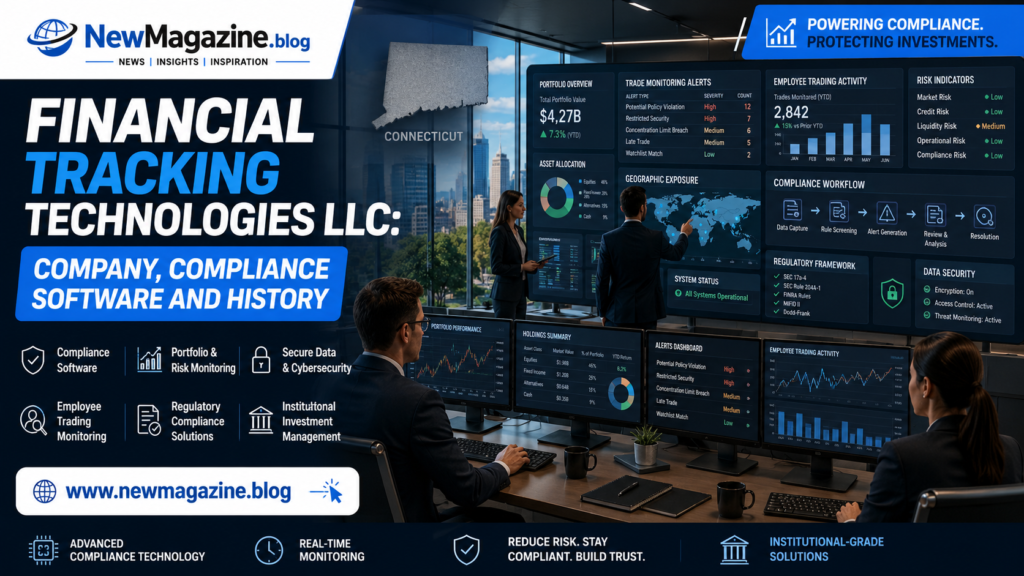
Financial Tracking Technologies, LLC was a financial technology company focused on regulatory compliance, investment oversight, and automated compliance monitoring. Historical company materials state that the business was founded in 1999 and began as an independent portfolio compliance monitoring and alerting service. Rather than functioning as a consumer focused personal finance application, Financial Tracking Technologies operated in the business to business financial technology and regulatory technology space. Its software was designed for organizations that needed to monitor investment activity, employee trading, portfolio rules, regulatory requirements, and other compliance processes.
The Company Core Business
The company’s historical materials describe a modular compliance platform designed for buy side and sell side firms, financial intermediaries, and public companies. Its customers and target users included organizations such as broker dealers, mutual funds, money managers, hedge funds, regulators, and public companies. This positioning is important because the name Financial Tracking Technologies could easily be interpreted as a personal finance or consumer budgeting company. The available evidence instead points toward institutional compliance technology.
A RegTech Focused Business
Financial Tracking Technologies can therefore be understood as an early RegTech company. RegTech refers broadly to technology used to help organizations manage regulatory requirements, compliance processes, monitoring, reporting, and risk controls. The company’s approach was centered on automating compliance activities that could otherwise require substantial manual work by compliance officers and investment professionals.
History of Financial Tracking Technologies LLC
The history of Financial Tracking Technologies is closely connected to the development of automated investment compliance technology. Company materials state that the business was founded in 1999, beginning with portfolio compliance monitoring and alerting. Over time, the company expanded its technology offering into a broader set of compliance modules.
From Portfolio Monitoring to Broader Compliance
The company’s historical About Us material says that it eventually offered 22 compliance modules, available either as a bundled platform or individually. The modular approach allowed financial organizations to select particular compliance capabilities instead of necessarily adopting every function. This model was particularly relevant for organizations with different regulatory obligations and internal workflows.
Growth in the Financial Compliance Market
Financial Tracking Technologies positioned automation as a way to help financial organizations reduce compliance costs while improving monitoring. A 2016 company announcement stated that the company had achieved its 11th consecutive year of record growth in 2015, attributing that growth to its focus on compliance technology and automation. The announcement also described the company as privately held and emphasized investments in its software platform and compliance solutions.
What Does Financial Tracking Technologies Do?
At its core, Financial Tracking Technologies developed technology to help financial organizations monitor investment activity against rules, policies, and regulatory requirements. The platform was designed to turn compliance processes into structured, technology assisted workflows.
Automated Compliance Monitoring
Compliance teams traditionally have to review large amounts of investment and employee activity. Automation can reduce some of this manual burden by comparing transactions and other data against predefined rules. Historical descriptions of Financial Trackings products included automated alerts and compliance monitoring across a range of financial activities.
Compliance Alerts
Alerts are especially important in financial compliance. Rather than requiring employees to manually inspect every transaction, an automated system can flag activity that potentially violates an investment guideline, internal policy, or regulatory requirement. The compliance team can then investigate the flagged event. This does not mean that every alert represents misconduct. An alert is generally a signal requiring review.
Financial Tracking Compliance Platform
Financial Tracking Technologies described its platform as a single stream compliance platform for the global investment industry. The company emphasized modular architecture, allowing clients to select compliance tools according to their needs.
Modular Compliance Architecture
A modular system can be useful because financial institutions don’t all have identical compliance requirements. A hedge fund may need extensive personal trading and portfolio monitoring. A broker dealer may have different obligations involving suitability, employee activity, and regulatory reporting. A modular architecture allows organizations to configure technology around their particular compliance program.
Centralized Compliance Workflows
Centralization can also improve visibility. Instead of maintaining separate spreadsheets, emails, databases, and manual processes for different compliance tasks, an organization can use a technology platform to bring relevant information and workflows into a more centralized environment. Historical descriptions of Financial Trackings software emphasized centralized compliance workstations and automated reporting.
Key Compliance Technology Areas
Financial Tracking Technologies historically offered tools covering a broad range of investment and regulatory compliance functions. Publicly available company descriptions and industry references identify several important areas.
Personal Trading and Employee Compliance
Employee personal trading is a significant compliance concern for investment organizations. Employees who have access to confidential or market sensitive information may be subject to strict rules governing their personal securities transactions. Financial Tracking materials described tools for employee trading, pre clearance, and workflow management.
Insider Trading Detection
The company also developed technology for identifying potential insider trading risks. A 2011 report described Financial Trackings Insider Trading Detection module and MarketACE database, which were designed to compare issuer events with trading activity and identify potentially suspicious relationships. The purpose of such technology is not to automatically determine that insider trading occurred. Instead, automated systems can help identify transactions or patterns that deserve further compliance investigation.
Best Execution Monitoring
Best execution is another area that appeared among Financial Trackings compliance capabilities. Investment firms have responsibilities concerning how transactions are executed for clients. Technology can help compliance teams establish monitoring processes and identify activity that may require further examination.
AML and KYC Monitoring
Historical descriptions also list AML/KYC among Financial Trackings compliance tools. AML refers to anti money laundering controls, while KYC means know your customer processes. These areas are central to financial compliance because institutions need procedures for identifying customers, assessing risk, and detecting potentially suspicious activity.
Portfolio Compliance
Portfolio compliance was one of the company’s original areas of focus. The system could compare investment portfolios against guidelines and identify potential deviations. This type of automated monitoring can be particularly useful for investment managers who need to ensure portfolios remain within client mandates, regulatory restrictions, or internal investment policies.
ComplianceWorkstation365
One of the company’s documented products was ComplianceWorkstation365, also referred to as CW365. Historical industry material describes it as an online centralized workstation for compliance and risk personnel.
Compliance Workflow Management
The purpose of ComplianceWorkstation365 was to organize compliance activities through a centralized system. The documented description says it used calendar oriented technology to organize, schedule, and report on compliance tasks. Compliance professionals could use the system to track testing activities and findings.
Reporting and Audit Support
Compliance programs often require documentation. A compliance officer may need to demonstrate what was tested, when it was tested, what was found, and what corrective action was taken. The historical description of ComplianceWorkstation365 included real time status reports and reporting capabilities intended to support clients, regulators, and internal audits.
Who Used Financial Tracking Technologies?
Financial Tracking Technologies was positioned primarily toward institutional financial organizations rather than individual consumers. Its historical materials identify a wide range of potential customers.
Broker Dealers and Investment Firms
Broker dealers have complex regulatory responsibilities and need technology to support compliance processes. Financial Trackings systems were used in contexts involving personal trading, portfolio rules, transaction monitoring, and regulatory compliance. A FINRA BrokerCheck report from 2024 also identifies Financial Tracking Technologies as a third party provider used to store employees outside brokerage account statements for a registered firm.
Asset Managers and Hedge Funds
Money managers, mutual funds, hedge funds, and other investment organizations were among the company’s stated client categories. For these organizations, automated compliance can be important because investment activity can involve thousands of transactions and numerous investment restrictions. Technology can help compliance teams focus their attention on exceptions rather than manually reviewing every piece of activity.
Public Companies and Other Organizations
Historical company materials also list public and private companies among its clients. The company’s product focus therefore extended beyond traditional investment managers and into organizations with broader compliance and governance requirements.
Financial Tracking Technologies and FINRA
Financial Tracking Technologies appears in financial industry records involving third-party compliance and recordkeeping arrangements. One 2024 FINRA BrokerCheck report identifies Financial Tracking Technologies LLC at 1111 East Putnam Avenue, Suite 304, Riverside, Connecticut 06878, describing its role in storing employees outside brokerage account statements for a registered firm.
Why Third Party Records Matter
Financial firms frequently rely on specialized technology providers to store, process, or monitor compliance information. The use of a third party provider does not eliminate the regulated firms own compliance responsibilities. Instead, the organization needs appropriate oversight of the vendor and its services.
Financial Tracking in Compliance Records
The appearance of Financial Tracking Technologies in FINRA related documentation provides evidence that its technology was used within regulated financial environments. It also illustrates why secure record keeping is an important part of the compliance technology ecosystem.
Financial Tracking Technologies and the SEC
Financial Tracking Technologies also appears in SEC filings related to investment company compliance procedures. Several filings reference the Financial Tracking System for employee securities transactions and pre-clearance procedures.
Employee Trade Pre Clearance
In the documented workflow, covered persons were required to complete an electronic trade request through the Financial Tracking System. The request could then be reviewed, with the employee receiving notification about whether the transaction was approved. SEC filed compliance documents describe this process as part of investment personnel trading controls.
Why Pre Clearance Technology Is Important
Pre clearance systems are designed to prevent employees from conducting prohibited or restricted transactions. Instead of allowing an employee to trade first and reviewing the transaction later, the organization can require approval before the trade takes place. This creates an additional control point within an investment firms compliance program.
Patents and Technology
Financial Tracking Technologies also has a documented history of technology related intellectual property. Patent records identify Walter Anthony Turner as an inventor associated with Financial Tracking Technologies LLC.
Automated Trading Controls
One patent application describes methods, systems, and computer readable media for automating trading and reversing financial trades. The disclosed system receives data about investment portfolios and proposed changes, then evaluates whether those changes would violate portfolio guidelines.
Rule Based Investment Monitoring
The underlying concept illustrates the company’s broader technology philosophy. Rather than relying entirely on manual compliance review, software can evaluate investment activity against predetermined rules. If a proposed change would create a deviation, the system can prevent or otherwise respond to that proposed action. This type of automation is an important foundation of modern financial compliance technology.
Acquisition and ComplySci
One of the most important developments in the company’s history is its acquisition by ComplySci. In August 2018, FinTech Collective reported that ComplySci had successfully completed the acquisition of Financial Tracking and said the acquisition would extend ComplySci’s product and services footprint.
What the Acquisition Meant
The acquisition brought Financial Trackings compliance technology and customer base into a broader regulatory technology organization. At the time, ComplySci was already developing compliance software focused on financial services organizations. Combining the businesses therefore had a clear strategic rationale expanding the range of compliance tools available to customers.
Understanding the Company’s Current Identity
This acquisition is important for anyone searching for Financial Tracking Technologies LLC today. Older references can still identify Financial Tracking Technologies as an independent company, while later industry references may associate its products or capabilities with ComplySci. Therefore, historical company information should not automatically be interpreted as evidence that Financial Tracking Technologies currently operates as an independent business under exactly the same structure.
Company Location and Public Information
Public records and company directories associate Financial Tracking Technologies with Connecticut, particularly the Greenwich and Riverside areas. A historical company listing gives an address of 1111 East Putnam Avenue, Riverside, Connecticut 06878, while other records show additional historical addresses.
Historical Headquarters
The Riverside address appears repeatedly in company and regulatory records. FINRA documentation also identifies the Riverside address in connection with Financial Tracking Technologies. This provides stronger evidence than relying solely on third-party business directories.
The Financial Tracking Website
Historical references identify financial tracking.com as the company’s website. The site was used in SEC related documents and industry materials discussing the company’s compliance products. Because the company’s corporate structure has changed since its earlier independent period, readers should verify the status of any website or login portal before entering credentials.
Reviews and Reputation of Financial Tracking Technologies
Searchers may also be looking for Financial Tracking Technologies LLC reviews. The challenge is that there are relatively few conventional consumer reviews because the company operated primarily as a B2B compliance technology provider.
Why Consumer Reviews Are Limited
Financial compliance software is typically purchased by institutions rather than individual consumers. A financial firms decision to use a compliance platform may involve procurement teams, compliance officers, technology departments, legal teams, and senior management. As a result, the company’s reputation is more likely to appear in regulatory records, industry publications, customer references, corporate announcements, and professional networks than in consumer review websites.
What Public Evidence Shows
Available historical evidence shows that the company had a substantial presence in the investment compliance technology market. Its products were referenced in SEC filings, FINRA related records, industry publications, and corporate announcements. A 2016 company announcement also reported eleven consecutive years of record growth, although this was a company issued claim rather than an independent financial audit.
Why Financial Tracking Technologies Was Important to FinTech
Financial Tracking Technologies represents an earlier generation of financial technology focused on automating regulatory compliance. Today, RegTech is often associated with artificial intelligence, machine learning, cloud computing, real time analytics, and automated surveillance. But the underlying idea is not new.
Automation Before Modern AI
Long before todays AI powered compliance systems, financial organizations were already trying to automate rule based monitoring. Financial Trackings products illustrate that transition. The system could take financial information, apply compliance rules, identify exceptions, and generate alerts or workflows for human review. That is conceptually similar to many modern compliance platforms even though todays technology can use far more sophisticated data processing.
Reducing Manual Compliance Work
Manual compliance processes can be expensive and difficult to scale. As transaction volumes increase, organizations need technology that can continuously evaluate activity. Financial Tracking Technologies positioned its products around this exact challenge, emphasizing automated compliance and operating-cost reduction.
Latest Update on Financial Tracking Technologies LLC
The most important point when discussing the company’s latest status is that Financial Tracking Technologies should be understood in historical context. The company was founded in 1999, built a compliance technology business, and was subsequently acquired by ComplySci in 2018.
What the Public Record Confirms
The 2018 acquisition announcement provides a clear milestone: ComplySci stated that it had completed the acquisition of Financial Tracking. This means that older pages describing Financial Tracking as an independent company may reflect the organizations pre acquisition structure.
Why Current Information Can Be Confusing
Search results can contain a mixture of historical company descriptions, archived websites, SEC references, business directory listings, and current third party databases. These sources do not necessarily describe the same corporate structure at the same point in time. For that reason, anyone seeking current employment, customer support, software access, ownership, or corporate information should verify it through the successor organizations current channels rather than relying solely on older Financial Tracking pages.
Stay Connect With Us
Conclusion
Financial Tracking Technologies LLC was an important early player in financial compliance technology, developing automated tools to help investment organizations monitor portfolios, employee trading, regulatory requirements, and other compliance risks. Founded in 1999, the company built its business around automated portfolio compliance monitoring and expanded into a broader modular compliance platform. Its historical product portfolio covered areas such as personal trading, insider trading detection, AML KYC, best execution, portfolio monitoring, and compliance workflow management. ts technology also appears in SEC and FINRA related records, illustrating how compliance software can become part of the operational infrastructure of regulated investment firms.
Perhaps the most important fact for people researching the company today is its 2018 acquisition by ComplySci. That event explains why information about Financial Tracking Technologies can appear under different corporate contexts across older and newer sources. For researchers, investors, compliance professionals, former employees, or anyone searching for the company, the key takeaway is that Financial Tracking Technologies was not primarily a consumer finance application. It was a business focused financial technology and RegTech company built around automated investment compliance and risk monitoring.
Do Not Miss Our
Frequently Asked Questions About Financial Tracking Technologies LLC
What is Financial Tracking Technologies LLC?
Financial Tracking Technologies LLC was a Connecticut based financial technology company founded in 1999 that specialized in automated investment compliance monitoring, alerts, risk controls, and regulatory technology. Its solutions were designed for financial institutions and other organizations with investment and regulatory compliance requirements.
When was Financial Tracking Technologies LLC founded?
Historical company materials state that Financial Tracking Technologies LLC was founded in 1999. The company began as an independent portfolio compliance monitoring and alerting service before expanding into a broader suite of compliance technologies.
What did Financial Tracking Technologies LLC do?
The company developed automated compliance software for investment and financial services organizations. Its documented capabilities included portfolio compliance, personal trading, insider trading detection, best execution, AML/KYC, employee trading workflows, compliance testing, and other risk management functions.
Who founded Financial Tracking Technologies LLC?
Public records identify Walter Anthony Turner, also known as Tony Turner in company materials, as a principal associated with Financial Tracking Technologies. Patent records also identify Walter Anthony Turner as an inventor on technology assigned to Financial Tracking Technologies LLC.
Was Financial Tracking Technologies LLC acquired?
Yes. In 2018, ComplySci announced that it had completed the acquisition of Financial Tracking, saying the acquisition would expand its product and services footprint.
Where was Financial Tracking Technologies LLC located?
Historical records associate the company with Riverside and Greenwich, Connecticut. One FINRA BrokerCheck document identifies 1111 East Putnam Avenue, Suite 304, Riverside, CT 06878 as the company’s business address.
Did Financial Tracking Technologies provide compliance software?
Yes. Compliance software was the company’s primary business focus. Historical materials describe a modular platform containing numerous compliance functions and an online compliance workstation.
Is Financial Tracking Technologies still an independent company?
The available evidence shows that Financial Tracking was acquired by ComplySci in 2018. Because corporate structures and product brands can change after acquisitions, it is safer to treat older references to Financial Tracking Technologies LLC as historical unless a current corporate source confirms otherwise.