
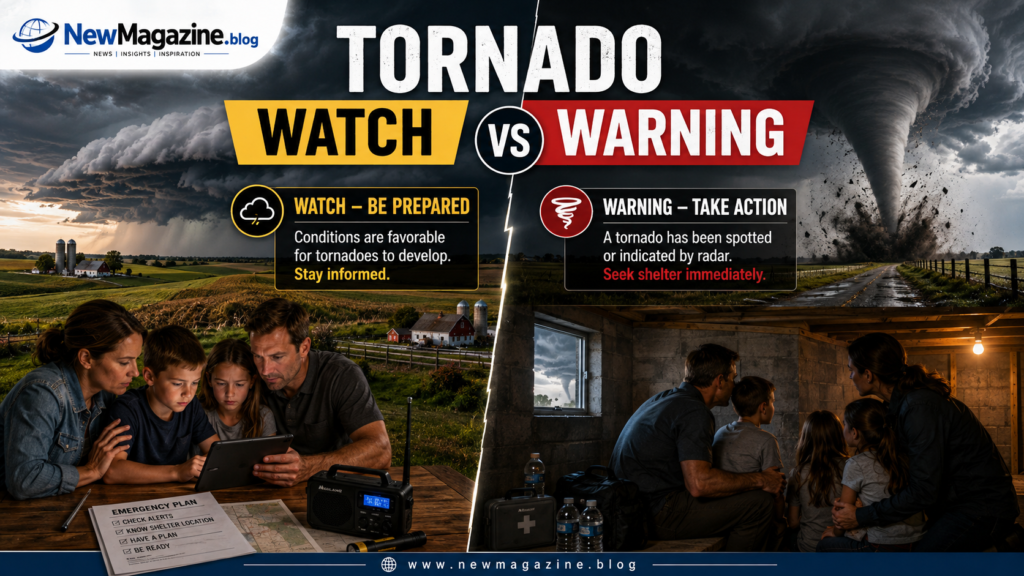

When severe weather appears in the forecast, one of the most important things to understand is the difference between a tornado warning vs watch. The two alerts may sound similar, but they communicate very different levels of danger and require different actions.
The easiest way to remember the difference is this
A tornado watch means be prepared. A tornado warning means take action immediately. A tornado watch means weather conditions are favorable for tornadoes to develop in or near the designated area. A tornado warning means a tornado has been sighted or indicated by weather radar, creating an immediate threat to people and property in the warned area. Understanding this distinction can help you avoid two dangerous mistakes panicking too early or waiting too long when immediate shelter is necessary.
This guide explains everything you need to know about tornado warning vs watch, including what each alert means, who issues the alerts, how to prepare, where to shelter, and common tornado safety myths.
What Is Tornado Warning vs Watch?
The phrase tornado warning vs watch refers to two different levels of weather alerts used to communicate tornado risk. Although both alerts mean that people should pay attention to severe weather, the level of urgency is significantly different. A watch tells you that tornadoes are possible. A warning tells you that dangerous tornado activity is occurring or is imminent and that you should move to shelter. A tornado watch means tornadoes are possible because atmospheric conditions can support their development. You should review your emergency plan, monitor the weather, and know where you will go if conditions worsen.
A tornado warning means a tornado has been detected by radar or reported by trained observers or other reliable sources. If your location is inside the warned area, the National Weather Service advises taking shelter immediately.
The key phrase to remember is
Watch = Be Prepared.
Warning = Take Action.
Why the Terms Are Commonly Confused
The words watch and warning sound similar in everyday language, which can cause confusion during fast moving weather events. Some people mistakenly believe that a warning simply means they should continue watching the weather. In reality, a tornado warning requires a much faster response because the threat is immediate. Another source of confusion is that a tornado warning can be issued even if no tornado watch was previously in effect. Tornadoes and severe thunderstorms can develop rapidly, and the National Weather Service may issue a warning directly when conditions require it.
What Is a Tornado Watch?
A tornado watch means that atmospheric conditions are favorable for tornadoes to develop in and near the watch area. It does not mean that a tornado is currently occurring. Instead, it means the environment contains the ingredients necessary for severe thunderstorms capable of producing tornadoes.
What Conditions Are Favorable Means
Meteorologists analyze multiple weather factors when assessing tornado potential. These can include instability, wind patterns at different altitudes, moisture, and the presence of thunderstorms capable of rotating. A tornado watch is issued when the broader weather environment creates a meaningful possibility of tornado development. This is the time to become weather aware. Check your emergency supplies, identify your safe location, make sure your phone can receive alerts, and stay updated through reliable weather information.
Who Issues a Tornado Watch
In the United States, tornado watches are issued by the National Weather Services Storm Prediction Center. Watch areas can be large and may include numerous counties or even portions of multiple states. This broad coverage reflects the fact that a watch identifies a larger region where conditions could support tornado development. A watch often provides valuable preparation time, but that does not mean the situation cannot become dangerous quickly.
What Is a Tornado Warning?
A tornado warning is a much more urgent alert. According to the National Weather Service, a tornado warning is issued when a tornado has been sighted or indicated by weather radar, creating an imminent danger to life and property in the affected area.
When a Warning Is Issued
Local National Weather Service forecast offices issue tornado warnings based on available weather information. Modern Doppler radar can detect storm characteristics that indicate tornado potential, while trained storm spotters, law enforcement, and other observers may provide reports of tornadoes or dangerous rotating storms. The warning is designed to identify a more specific area that may be affected, allowing people in that location to take immediate protective action.
Why Immediate Action Matters
A tornado can move quickly, and the amount of warning time available may be limited. If a tornado warning includes your location, do not wait outside to look for the tornado. Do not spend unnecessary time gathering belongings or recording the storm. Move to your designated safe location immediately. The National Weather Service recommends going to a basement, safe room, or interior room on the lowest floor of a sturdy building and staying away from windows.
Tornado Warning vs Watch Explained Clearly
The most important difference in tornado warning vs watch is the level of immediate danger. A watch is an alert about the possibility of tornadoes. A warning is an alert about an active or imminent tornado threat.
Be Prepared Versus Take Action
During a tornado watch, preparation is the priority. You should know where your shelter is, monitor reliable weather updates, keep your phone charged, and make sure everyone in your household understands the plan. During a tornado warning, preparation time is over. The priority becomes immediate shelter. The National Weather Service summarizes the distinction clearly a tornado watch means be prepared, while a tornado warning means take action.
The Difference in Size and Location
Tornado watches usually cover larger geographical areas. A watch may include many counties because meteorologists are identifying a broad region where tornadoes could potentially form. Warnings are generally much smaller and more targeted. They are issued for specific areas that could be affected by a particular dangerous storm. This means you should always check whether your exact location is included in a warning rather than assuming that a warning applies to an entire state or region.
What to Do During a Tornado Watch
A tornado watch is your opportunity to prepare before an immediate threat develops. Use the time wisely. Weather conditions can change rapidly, and a warning may be issued with limited notice.
Preparing Your Safe Location
Identify the safest available location where you live, work, or attend school. A basement or properly designed storm shelter is generally a preferred option. If those are unavailable, identify a small interior room or hallway on the lowest floor of a sturdy building and away from windows. Make sure the area is accessible. A safe location is not useful if it is blocked by storage, difficult to reach, or unknown to other family members.
Monitoring Changing Weather Conditions
Keep informed through reliable weather sources. The National Weather Service recommends staying weather-ready and monitoring updates through local news or NOAA Weather Radio. Wireless Emergency Alerts can also provide important notifications. If severe weather is expected, avoid assuming that the situation will remain unchanged. Tornado-producing storms can develop quickly.
What to Do During a Tornado Warning
When a tornado warning is issued for your location, immediate action is essential. Go to the safest available shelter without waiting for visual confirmation of a tornado.
Finding the Safest Available Shelter
If you are in a sturdy home or building, go to a basement, storm shelter, or interior room on the lowest floor. Stay away from windows and exterior walls. Put as many walls as possible between yourself and the outside. Small interior spaces such as bathrooms, closets, or hallways may provide better protection than large open rooms with wide roofs.
Protecting Yourself From Flying Debris
Flying debris is a major cause of tornado related injuries. If possible, protect your head and neck. Get beneath sturdy furniture when appropriate and use available protective materials. The exact shelter situation can vary by building, so having a plan before severe weather arrives is safer than trying to make complex decisions after a warning has already been issued.
Where to Take Shelter
The safest location depends on where you are when a tornado warning occurs. A properly designed storm shelter or safe room provides strong protection, but many people will need to use the safest available location in an ordinary building.
Safety at Home
At home, move to a basement if one is available.If there is no basement, go to the lowest floor and choose a small interior room away from windows. Avoid large open spaces and exterior rooms with many windows. The goal is to place as much sturdy structure as possible between you and the outside.
Safety at Work, School, and Large Buildings
Follow the buildings designated tornado or severe weather plan. Schools, workplaces, hospitals, factories, and other large facilities may have established shelter areas. If a designated shelter is unavailable, an interior hallway on the lowest level may be safer than large rooms with expansive roofs. Do not move toward windows to watch the storm. The safest decision is usually to shelter first and monitor official information afterward.
Tornado Safety When You Are Outside or Driving
Being outdoors or inside a vehicle can create additional challenges during a tornado. The safest option is generally to get inside a substantial, sturdy building if one can be reached safely.
Why Vehicles Can Be Dangerous
Vehicles are not designed to protect occupants from tornado winds and flying debris. If you are driving and can safely reach a sturdy shelter before dangerous conditions arrive, the National Weather Service advises doing so rather than trying to outrun a tornado through congested or unfamiliar areas. Never assume that driving faster will guarantee safety. Road conditions, traffic, visibility, and storm movement can make that strategy extremely dangerous.
Why Overpasses Are Not Safe Shelters
A common tornado myth is that hiding beneath a highway overpass is safe. National Weather Service guidance specifically warns against using overpasses as tornado shelters. They can create dangerous wind conditions and expose people to flying debris. Your best option is a sturdy building or designated tornado shelter.
How Tornado Alerts Are Issued
Tornado alerts are based on meteorological analysis and real time observations. Different parts of the National Weather Service system play different roles in identifying broader severe weather risk and issuing localized warnings.
The Role of Weather Radar and Observations
Meteorologists use weather radar to monitor thunderstorms and identify characteristics that may indicate dangerous rotation. Warnings can also be supported by reports from trained spotters, emergency personnel, and other reliable observers. When a tornado is sighted or indicated by radar, local forecast offices can issue warnings for the threatened area.
The Agencies Behind Watches and Warnings
The Storm Prediction Center is responsible for issuing tornado watches covering broader regions where tornado development is possible. Local National Weather Service forecast offices issue tornado warnings for more specific areas facing an immediate threat. This system helps communicate both the broader risk and the immediate danger.
How Long Tornado Watches and Warnings Last
The duration of an alert depends on the weather situation. A tornado watch may remain active for several hours because it covers a broader period when severe weather conditions are expected.
Why a Watch Can Cover a Larger Area
Tornado watches commonly cover large geographical regions and may last for several hours. National Weather Service information notes that watches are often issued for periods of several hours, frequently in the range of roughly four to eight hours depending on the event. Always check the official alert for its exact expiration time.
Why Warnings Are More Specific
Tornado warnings are usually focused on the path or area threatened by a specific storm. They may last for a shorter period, but the immediate danger is much greater. A warning should never be treated as less serious simply because its duration is shorter. The purpose of the warning is to communicate that protective action is needed now.
Common Mistakes During Tornado Alerts
Knowing what not to do can be just as important as knowing what to do. Many dangerous decisions come from outdated information, overconfidence, or waiting too long.
Waiting Too Long to Act
One of the biggest mistakes is delaying shelter during a tornado warning. People may want visual confirmation before acting, but tornadoes can be difficult to see because of darkness, heavy rain, buildings, or terrain. If your location is included in a tornado warning, follow official safety guidance and move to shelter immediately.
Relying on Outdated Tornado Myths
Do not open windows to equalize pressure. The National Weather Service identifies this as an outdated myth that wastes valuable time. Similarly, do not assume that an overpass is a safe shelter or that you can always outrun a tornado in a vehicle. Preparation based on current official guidance is safer than relying on stories passed down over generations.
Tornado Warning, Watch and Emergency
Tornado watches and warnings are not the only tornado related alerts people may encounter. In particularly dangerous situations, the National Weather Service may issue a tornado emergency.
Understanding the Highest Level of Alert
A tornado emergency is used for an especially dangerous situation involving a severe threat to human life and catastrophic damage. The National Weather Service describes it as its highest tornado alert level. If you receive this type of alert, seek the safest possible shelter immediately and continue monitoring official information when it is safe to do so.
Why Every Alert Requires a Different Response
A tornado watch requires awareness and preparation. A tornado warning requires immediate protective action. A tornado emergency communicates an extreme and potentially catastrophic threat. Understanding these differences allows people to respond appropriately instead of treating every alert the same way.
Why Tornado Warning vs Watch Is Trending
The phrase tornado warning vs watch often experiences increased search activity when severe weather threatens populated areas. During fast moving storms, people may receive alerts on their phones and immediately search for an explanation of what the message means.
Increased Awareness During Severe Weather
Wireless alerts and social media can spread weather information rapidly. While this can help people receive warnings quickly, it can also create confusion when users encounter unfamiliar terminology. A clear understanding of watch and warning before severe weather occurs can reduce confusion when every minute matters.
Why Fast Changing Weather Creates Confusion
Weather conditions can escalate quickly from a general risk to a specific tornado threat. People may see a tornado watch earlier in the day and incorrectly assume that the situation remains unchanged even after a warning is issued. The best approach is to continue monitoring official updates throughout the event.
Latest Update on Tornado Alerts
Modern tornado communication increasingly relies on multiple methods of delivering urgent information. These can include mobile alerts, NOAA Weather Radio, television and radio broadcasts, official weather websites, and local emergency management systems.
Modern Alert Technology
Wireless Emergency Alerts can notify compatible mobile devices about serious hazards.The National Weather Service also emphasizes the importance of having multiple ways to receive weather information because power outages, internet failures, and overnight storms can limit access to a single source. A NOAA Weather Radio can provide an additional method of receiving alerts, particularly when other communication systems are unavailable.
Why Official Weather Sources Remain Essential
Social media can provide rapid information, but posts may be outdated, incorrectly interpreted, or shared outside the relevant warning area. For active weather threats, prioritize official National Weather Service information and local emergency authorities. Following official alerts helps ensure that you are responding to the latest available information for your specific location.
Reviews and Public Understanding
There are no traditional reviews for a tornado alert system, but public understanding is essential to its effectiveness. An alert only helps when people understand what it means and know what action to take.
The Importance of Clear Safety Communication
The simple distinction between be prepared and take action is designed to make tornado alerts easier to understand. Clear language can reduce hesitation during emergencies. The National Weather Service continues to use this distinction in public tornado safety education.
How the Watch and Warning System Helps Communities
Watches give communities time to prepare. Warnings focus attention on areas where an immediate tornado threat exists. Together, these alerts help individuals, schools, businesses, and emergency organizations make decisions based on the changing level of risk.
Stay Connect With Us:
Conclusion
Understanding tornado warning vs watch is simple, but it can be critically important during severe weather. A tornado watch means be prepared. Tornadoes are possible, so monitor conditions, review your safety plan, and know where you will shelter. A tornado warning means take action immediately. A tornado has been sighted or indicated by radar, and people in the warned area should move to a safe location without delay.
The best time to learn tornado safety is before an emergency occurs. Know your safe place, have multiple ways to receive alerts, and rely on current information from official weather authorities. When severe weather arrives, remember the essential difference Watch the weather. Prepare your plan. When a warning is issued for your area, stop waiting and take shelter.
Frequently Asked Questions About Tornado Warning vs Watch
Is a tornado warning worse than a watch?
Yes. A tornado warning indicates a more immediate threat because a tornado has been sighted or indicated by radar. A tornado watch means conditions are favorable for tornadoes, but a tornado is not necessarily occurring.
What should you do during a tornado watch?
Stay alert and prepare to act. Review your emergency plan, identify your safe location, monitor official weather information, and make sure you can receive warnings.
What should you do during a tornado warning?
Go immediately to a basement, safe room, or small interior room on the lowest floor of a sturdy building. Stay away from windows and protect your head and neck from flying debris.
Can a tornado warning happen without a watch?
Yes. The National Weather Service explains that tornado warnings do not always require a tornado watch to already be in effect because dangerous storms can develop rapidly or affect relatively small areas.
How long does a tornado warning last?
The exact duration varies by event and warning area. Tornado warnings are often relatively short and focused on a specific storm, but you should always check the expiration time in the official alert rather than assuming a standard duration.
What is a tornado emergency?
A tornado emergency is the National Weather Services highest tornado alert level. It is used for an exceptionally dangerous situation involving a severe threat to life and potentially catastrophic damage. Seek the safest available shelter immediately.
Should you drive during a tornado warning?
Driving during a tornado can be extremely dangerous. If possible, get to a nearby sturdy shelter safely rather than attempting to outrun a tornado. Do not shelter under an overpass.
Is a basement always the safest place?
A basement is generally a strong shelter option when available, but a properly designed tornado safe room or storm shelter may provide even greater protection.