
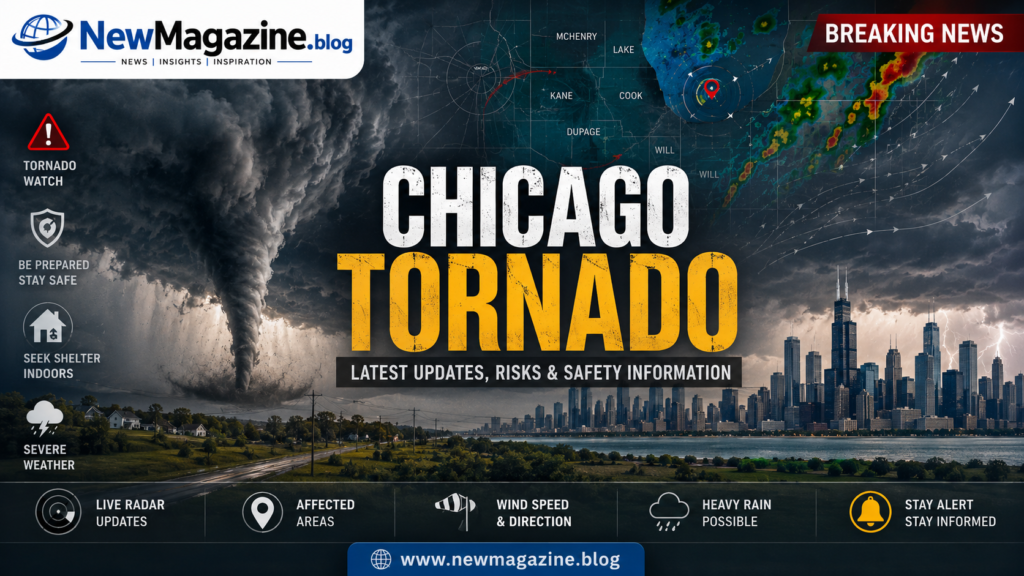

When people search for Chicago tornado, they are often looking for one thing clear and reliable information about whether tornadoes are affecting Chicago or the surrounding metropolitan area. Severe weather can develop quickly in Illinois, and a tornado threat can create understandable concern among residents, commuters, travelers, and families.
Chicago is not usually the first place that comes to mind when people think about Americas most tornado prone regions. However, the Chicago metropolitan area and northeastern Illinois can experience powerful thunderstorms capable of producing damaging winds, large hail, flash flooding, and tornadoes. Understanding the difference between a tornado watch and a Chicago Tornado warning, knowing where to seek shelter, and following reliable weather information can make a significant difference during severe weather.
This guide explains what the term Chicago tornado means, why it may be trending, how tornado risk affects the region, what history tells us about severe weather around Chicago, and how to prepare for a tornado emergency.
What Is a Chicago Tornado?
A Chicago tornado generally refers to a tornado that occurs within the city of Chicago, near the city, or somewhere in the broader Chicago metropolitan area. Search results and news headlines may use the phrase broadly, even when the tornado it self touches down in a nearby suburb or another part of northeastern Illinois.
This distinction matters because the Chicago metropolitan region covers a large geographic area. A tornado warning affecting one county or suburb does not necessarily mean that the entire city of Chicago is experiencing a tornado. People should always check the exact warning area rather than relying only on a headline or social media post.
Understanding the Meaning Behind the Search Term
The phrase can describe several different situations. It may refer to a confirmed tornado, a tornado warning, radar indicated rotation, severe thunderstorms capable of producing tornadoes, or historical tornado activity in the Chicago area.
Because search interest often increases rapidly during severe weather, users may see the term trending before all the details of an event are confirmed. Early reports can change as meteorologists analyze radar data, storm surveys, eyewitness accounts, and damage patterns.
For that reason, the best approach is to treat a trending search term as a starting point rather than the final source of information. Official weather alerts should always take priority over rumors, viral videos, or unverified posts.
Tornadoes in the Chicago Metropolitan Region
The greater Chicago area can experience tornadoes because it is located in a part of the United States where different air masses can occasionally create conditions favorable for severe thunderstorms. Warm, humid air, atmospheric instability, wind shear, and powerful storm systems can combine to produce rotating thunderstorms.
A tornado does not need to occur in downtown Chicago to become a major regional event. Tornadoes in nearby communities can disrupt transportation, damage homes, cause power outages, and affect thousands of people across the metropolitan area.
Latest Chicago Tornado Updates
The phrase Chicago tornado latest update is especially important during active severe weather. Tornado situations can change within minutes, and the information available early in an event may be incomplete.
A developing storm may initially trigger a severe thunderstorm warning before conditions change and a tornado warning is issued. In other situations, a tornado warning may be issued because radar detects dangerous rotation even before a tornado is visually confirmed.
Why Weather Updates Can Change Quickly
Weather forecasting technology provides meteorologists with valuable information, but tornado development remains a fast-moving process. Radar can detect storm rotation and other warning signs, while trained observers and emergency officials may provide additional confirmation.
After a storm passes, meteorologists may conduct damage surveys to determine whether a tornado occurred and, if so, estimate its path and intensity. This means early reports may later be updated or corrected.
For readers searching for the latest Chicago tornado update, the most important information is the current official alert status, the specific locations affected, and recommended safety actions.
Where to Find Official Warnings and Emergency Information
During an active weather emergency, rely on official weather agencies, local emergency management offices, and established local broadcasters. Weather alerts should identify the counties or communities included in a watch or warning.
Mobile emergency alerts and weather applications can also provide useful notifications. However, users should ensure that location permissions and emergency notifications are enabled before severe weather arrives.
Do not wait for a social media post to tell you that a tornado warning has been issued. If severe weather is expected, monitor reliable alerts proactively.
Why Is Chicago Tornado Trending?
A sudden increase in searches for Chicago tornado can happen for several reasons. The most obvious is an active tornado warning or confirmed tornado in the Chicago area. Major thunderstorms, dramatic radar images, emergency sirens, and reports of storm damage can also drive public interest.
Search trends can spread rapidly because people want to know whether family members, homes, workplaces, schools, or travel routes may be affected. During a major weather event, thousands of people may search for the same phrase within a short period.
Severe Weather and Public Attention
Chicago is one of the largest metropolitan areas in the United States, so severe weather affecting the region naturally attracts widespread attention. Even a tornado threat can become a significant news event because of the large population and extensive transportation network.
Airports, highways, rail systems, sporting events, schools, and businesses can all be affected by severe weather. As a result, the public often searches for updates even when the most dangerous conditions are limited to a specific part of the region.
Social Media, Radar Images, and Breaking News
Social media can make a weather event appear larger or more immediate than it actually is. A dramatic video may be shared thousands of times without clear information about where or when it was recorded.
Radar screenshots can also be misunderstood by people without meteorological training. A hook shaped storm pattern or an area of rotation may indicate danger, but interpreting radar requires context.
Always verify the date, location, and source of weather content before sharing it. Old tornado videos are sometimes reposted during new storms, creating unnecessary confusion.
Chicago and Tornado Risk
Chicago faces a variety of weather risks throughout the year. Winter storms, extreme cold, heavy rain, flooding, damaging winds, and severe thunderstorms can all affect the region. Tornadoes are less frequent than ordinary thunderstorms, but they remain an important weather hazard.
The level of risk varies depending on the season and the specific atmospheric conditions. Tornado producing storms are often associated with strong severe weather systems, but every storm is different.
Chicagos Geographical Location and Severe Weather Patterns
Illinois sits in a region where contrasting air masses can interact. Under the right conditions, warm and moist air can meet cooler and drier air, creating atmospheric instability.
Strong changes in wind direction and speed at different heights can add rotation to thunderstorms. When storms organize in a favorable environment, tornado development becomes possible.
Chicagos location near Lake Michigan can also influence local weather patterns. However, no simple rule guarantees that the lake will prevent or cause tornadoes. Severe weather is influenced by multiple atmospheric factors.
The Role of Thunderstorms and Atmospheric Instability
Most tornadoes develop from severe thunderstorms. Meteorologists evaluate ingredients such as moisture, instability, lift, and wind shear when assessing the potential for severe weather.
A tornado warning does not mean that everyone in the warning area will see a tornado. It means that dangerous tornado conditions are occurring or considered imminent within the warned area.
This is why location specific information is essential. A warning polygon or official alert area provides much more useful information than a general statement that a Chicago tornado is occurring.
The History of Tornadoes in the Chicago Area
The Chicago region has experienced tornadoes and destructive severe weather throughout its history. Historical events demonstrate that densely populated urban and suburban areas are not immune to tornadoes.
Studying past events also helps emergency managers, meteorologists, and residents improve preparedness. Building practices, forecasting technology, warning systems, and public awareness have all changed over time.
Historic Tornado Events
Some of the most significant tornado disasters in the broader Chicago region occurred long before modern radar and smartphone alerts. Historical events serve as reminders that severe storms can have devastating consequences when they affect populated communities.
Modern forecasting and warning systems provide people with more opportunities to take protective action. However, technology is most effective when people understand what alerts mean and respond quickly.
Historical information should therefore be viewed not only as a record of past disasters but also as a source of preparedness lessons.
Tornado Activity Across Northeastern Illinois
Tornado activity in northeastern Illinois is not limited by city boundaries. Storms can move through rural areas, suburbs, industrial zones, and densely populated communities.
The path of a tornado can also be relatively narrow compared with the size of a metropolitan area. One neighborhood may experience severe damage while another nearby location receives only heavy rain or strong winds.
This uneven impact explains why reports from different residents can sound completely different during the same storm event.
Lessons Learned From Previous Severe Weather Events
One of the most important lessons is that preparedness should begin before a warning is issued. Waiting until a tornado is approaching to decide where to shelter can waste valuable time.
Families should discuss where they will go, how they will communicate, and how they will receive emergency alerts. Businesses and schools should also have clear severe weather procedures.
Preparation does not eliminate risk, but it can reduce confusion during a fast moving emergency.
How Tornado Warnings Work in Chicago
Understanding weather terminology is essential for anyone searching for Chicago tornado warnings. A tornado watch and a tornado warning are not the same thing.
A watch generally means that weather conditions are favorable for tornadoes and that people should remain alert. A warning indicates a more immediate threat and requires people in the affected area to take protective action.
Tornado Watch Versus Tornado Warning
A tornado watch covers a broader area and is issued when atmospheric conditions support the possible development of tornadoes. It is a signal to review your emergency plan and monitor weather information.
A tornado warning is more urgent. It applies to a specific area where a tornado is occurring, has been detected, or is considered imminent based on weather observations.
If your location is included in a tornado warning, do not spend time trying to watch the storm from outside or through a window. Move to an appropriate shelter location immediately.
Sirens, Mobile Alerts, and Weather Notifications
Outdoor warning sirens can alert people who are outside, but they should not be your only method for receiving severe weather information. Sirens may not be easily heard indoors, especially during heavy rain or strong winds.
A weather radio, smartphone alerts, trusted weather applications, television, and official emergency notifications can provide additional layers of warning.
Using multiple alert methods is one of the most practical ways to improve preparedness.
What to Do During a Chicago Tornado Warning
When a tornado warning includes your location, the priority is immediate safety. Go to the lowest practical level of a sturdy building and move to an interior room away from windows.
Basements and designated storm shelters are generally preferred when available. If neither is available, choose a small interior room, hallway, or other protected space on the lowest level.
Finding the Safest Shelter
Protect your head and neck using your arms, a helmet, pillows, blankets, or other available protective materials. Stay away from windows, exterior doors, and large open rooms with wide-span roofs when possible.
Do not use an elevator during a severe weather emergency. If you live in a high rise building, follow the buildings emergency procedures and move to a designated interior shelter area.
The safest location can vary depending on the structure, so it is wise to identify your shelter area before severe weather arrives.
Protecting Yourself at Home, Work, School, or While Traveling
At work or school, follow established emergency procedures and instructions from responsible staff. Avoid leaving a protected building simply to travel home during an active tornado warning unless officials specifically direct otherwise.
If you are driving, do not attempt to outrun a tornado in heavy traffic or dangerous conditions. The safest decision depends on your exact surroundings, available shelter, and the movement of the storm.
Because tornado situations are highly location dependent, follow official emergency instructions and seek a sturdy shelter whenever safely possible.
Chicago Tornado Damage and Community Recovery
Tornado damage can range from broken branches and damaged roofs to the destruction of homes and businesses. Strong winds can turn ordinary objects into dangerous projectiles.
Power lines, trees, vehicles, and buildings may all be affected. Even after a tornado passes, hazards can remain in damaged areas.
Common Types of Tornado Damage
Damage patterns may include missing roofing materials, shattered windows, overturned vehicles, fallen trees, and structural collapse. Flooding and lightning can create additional dangers during the same severe weather event.
People returning to damaged property should remain cautious. Downed power lines, gas leaks, unstable structures, and contaminated floodwater can all present serious risks.
Emergency officials may restrict access to heavily damaged areas until safety assessments are completed.
Emergency Response and Recovery
Recovery begins with protecting life and restoring essential services. Emergency responders may conduct search and rescue operations, while utility crews work to restore electricity and other services.
Community organizations, local governments, and volunteers may also provide assistance to affected residents. Documentation can be important for insurance and recovery purposes.
Taking photographs of damage, saving receipts, and following instructions from insurers and local authorities can help organize the recovery process.
How to Prepare Before Tornado Season
The best time to prepare for a tornado is before severe weather is approaching. A simple emergency plan can reduce panic and help every household member understand what to do.
Preparation should include identifying safe shelter locations, discussing communication plans, and ensuring that emergency alerts are available.
Building an Emergency Plan
Choose a meeting point and make sure family members know how to contact one another if mobile networks become congested. Consider the needs of children, older adults, pets, and people who may need additional assistance.
If you live in an apartment or other multi unit building, ask property management about the recommended tornado shelter location.
Practice makes emergency procedures easier to remember when stress levels are high.
Creating a Tornado Emergency Kit
A basic emergency kit can include drinking water, nonperishable food, flashlights, batteries, a first aid kit, necessary medications, important documents, and phone charging equipment.
Consider adding a whistle, protective gloves, sturdy shoes, and weather appropriate clothing. Keep the kit in a location that can be accessed quickly.
The goal is not to create a perfect survival collection. It is to ensure that you have essential supplies available if severe weather causes injuries, power outages, or temporary disruptions.
How to Track Chicago Tornado Weather Safely
Reliable information is essential during severe weather. Official weather alerts provide the clearest guidance about watches, warnings, affected locations, and immediate protective actions.
Local television and radio stations can also provide useful live coverage, especially when they work directly with meteorological data and emergency agencies.
Reliable Weather Sources
Use official weather services and trusted emergency management organizations as your primary sources for warnings. Enable emergency alerts on your phone and consider keeping a battery powered weather radio available.
If internet or cellular service is disrupted, radio broadcasts may become especially valuable.
Before relying on a weather application, check that it provides official warnings and location-specific notifications.
Why Social Media Should Not Be Your Only Source
Social media can provide useful eyewitness information, but it can also spread misinformation. Videos may be old, locations may be mislabeled, and dramatic claims may be shared before authorities verify them.
During an active emergency, every minute matters. Avoid spending valuable time trying to determine whether an unverified viral post is accurate.
Instead, use social media as a secondary source and confirm critical information through official alerts.
Reviews and Public Response
Public response to severe weather warnings often depends on previous experience. People who have lived through tornadoes or major storms may take alerts very seriously, while others may underestimate the risk because they have never personally experienced a tornado.
This difference in perception is one reason why clear and consistent public communication is important.
How Residents Respond to Severe Weather Alerts
Residents may respond by checking radar, contacting family members, moving vehicles into garages, securing outdoor objects, or preparing emergency supplies. These actions can be useful when taken before dangerous conditions arrive.
Once a tornado warning is active for your location, however, personal safety becomes the priority. Do not delay sheltering to record videos or continue monitoring a storm visually.
The best response is a combination of preparation, accurate information, and immediate action when an official warning requires it.
The Importance of Preparedness and Communication
Reviews of emergency preparedness strategies often emphasize redundancy. A single warning method can fail because of power loss, device settings, poor reception, or simple human error.
Multiple alert systems, a clear family plan, and a known shelter location create a stronger safety net.
Preparedness is especially important in a large metropolitan area such as Chicago, where people may be at home, commuting, working, attending school, or traveling when severe weather develops.
Stay Connect With Us:
Conclusion
The keyword Chicago tornado can represent a breaking weather event, a tornado warning, a historical question, or a search for emergency safety information. Regardless of why the term is trending, the most important priority is accurate information.
Chicago and the wider northeastern Illinois region can experience severe thunderstorms and tornadoes. Residents should understand local warning systems, maintain an emergency plan, identify a safe shelter location, and use official weather sources during active storms.
A tornado can develop quickly, but preparation does not have to be complicated. Knowing the difference between a watch and a warning, having multiple ways to receive alerts, and acting immediately when your location is under a tornado warning can help protect you and the people around you.
Stay weather aware, verify breaking information before sharing it, and treat official tornado warnings as an immediate signal to take protective action.
Frequently Asked Questions About Chicago Tornadoes
Is Chicago in Tornado Alley?
Chicago is not typically identified with the traditional core image of Tornado Alley, but Illinois can experience tornadoes. The Chicago metropolitan area should not assume it is free from tornado risk.
Does Chicago Get Tornadoes?
Yes, tornadoes can occur in Chicago and the surrounding metropolitan region. Tornado activity may affect suburbs or nearby communities even when central Chicago is not directly impacted.
What Should I Do During a Tornado Warning?
If a tornado warning includes your location, seek shelter immediately in the safest available part of a sturdy building. Move away from windows and protect your head and neck.
How Do I Know if a Tornado Warning Affects My Location?
Official alerts typically identify the geographic area covered by the warning. Check your phone alerts, trusted weather sources, and official emergency information for your specific location.
Are Outdoor Warning Sirens Enough?
No. Outdoor warning sirens are designed primarily to alert people who are outside. They may not be audible inside homes, offices, vehicles, or other buildings.
Can Tornadoes Occur at Night?
Yes. Tornadoes can occur at night, and darkness can make them more difficult to see. This makes reliable alerts especially important.
What Should I Include in a Tornado Emergency Kit?
Include water, food, flashlights, batteries, a first aid kit, essential medications, phone charging options, and copies of important documents.
Where Is the Safest Place in an Apartment During a Tornado?
The best location depends on the building. In general, move to the lowest practical level and choose an interior area away from windows.